What CDFW Actually Requires
If you harvest a black bear in California, the California Department of Fish and Wildlife requires you to present the bear, skull intact, for mandatory tagging. That visit is also where the tooth comes out.
CDFW staff extract a premolar during check-in. It is a small tooth sitting just behind the canine. The tooth is sent off for cementum-annuli age analysis, and the data feeds CDFW's bear population management.
Translation: you are not pulling the tooth in the field. CDFW pulls it at the office. Your job is to show up with a bear they can work on.
The window is roughly 10 days from harvest to present the bear at a CDFW office or designated check station. The premolar extraction is handled by CDFW personnel at check-in, not by you in the field.
Check your current tag and the CDFW bear page for the exact requirements for your season and region. Rules can shift year to year.
Why Timing Matters. The Rigor Window.
Rigor mortis does not run on a schedule you can set a watch to. Onset in the jaw and head typically falls somewhere in a roughly one-to-six-hour range after the shot, depending on ambient temperature, body mass, and how hard the animal worked before it went down. Cold conditions slow it. Heat and exertion speed it up.
What this means for you is simple. You do not have a lot of time, and you cannot predict the exact hour it tightens up. Treat the minutes right after the kill as the only window that matters, and set the jaw now.
| Stage | What You Do |
|---|---|
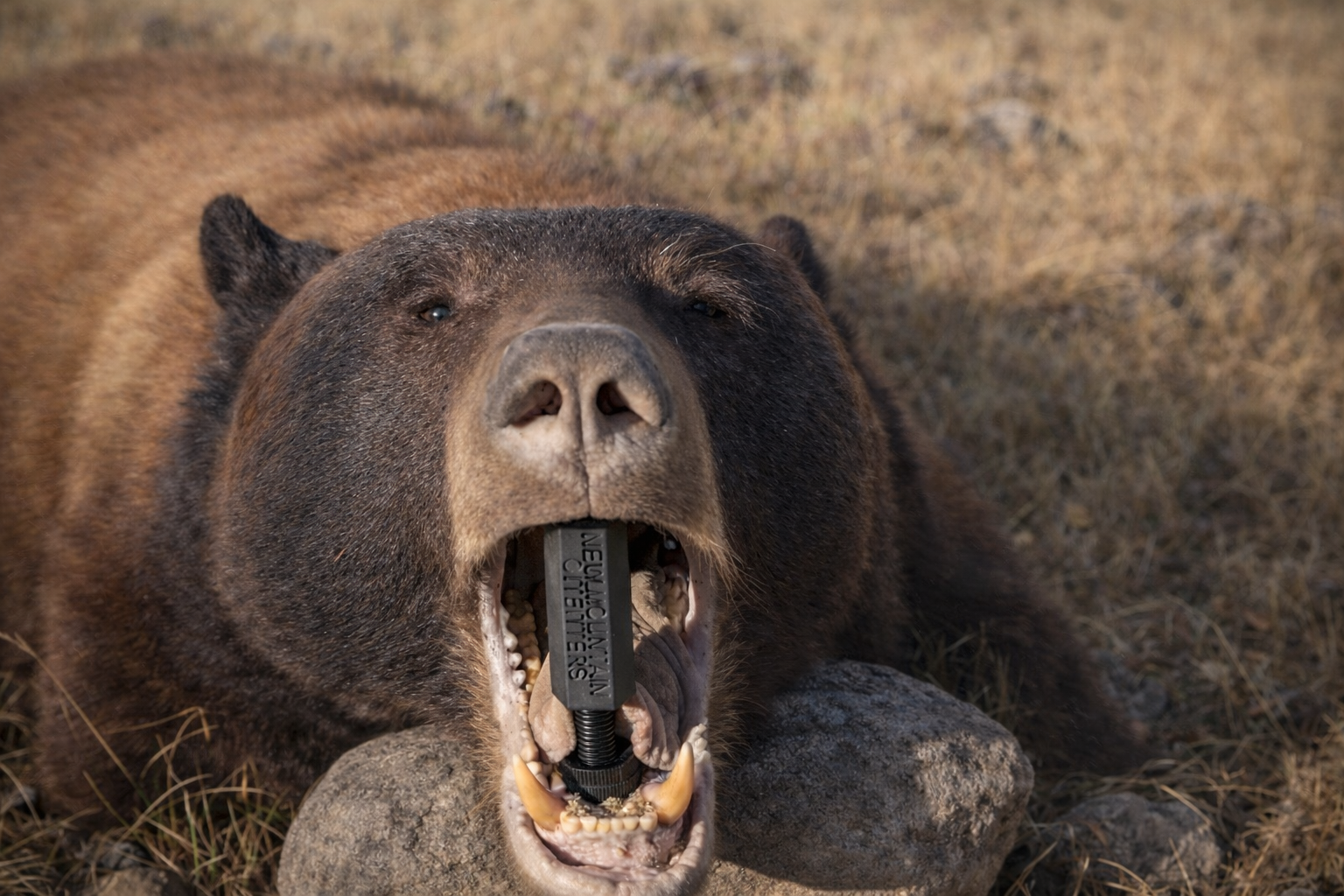
| Within minutes of the shot | Set the jaw open with the Last Bite. This is the only window where it is easy. The jaw is still loose and the mouth opens without resistance. |
| Field dressing | Skinning around the head is faster with the mouth open and the tongue out of the way. The Bite keeps everything clear while you work. |
| Pack out | Bite stays in. No re-handling. No fussing with a mouth that has already locked up by the time you make it to the truck. |
| Truck or cooler | Jaw is open, accessible, and stays that way through the drive home and however long the bear waits before the check-in visit. |
| CDFW check-in | Premolar is reachable. CDFW staff extract it cleanly without wrestling a frozen jaw. You are out faster and so is the line behind you. |
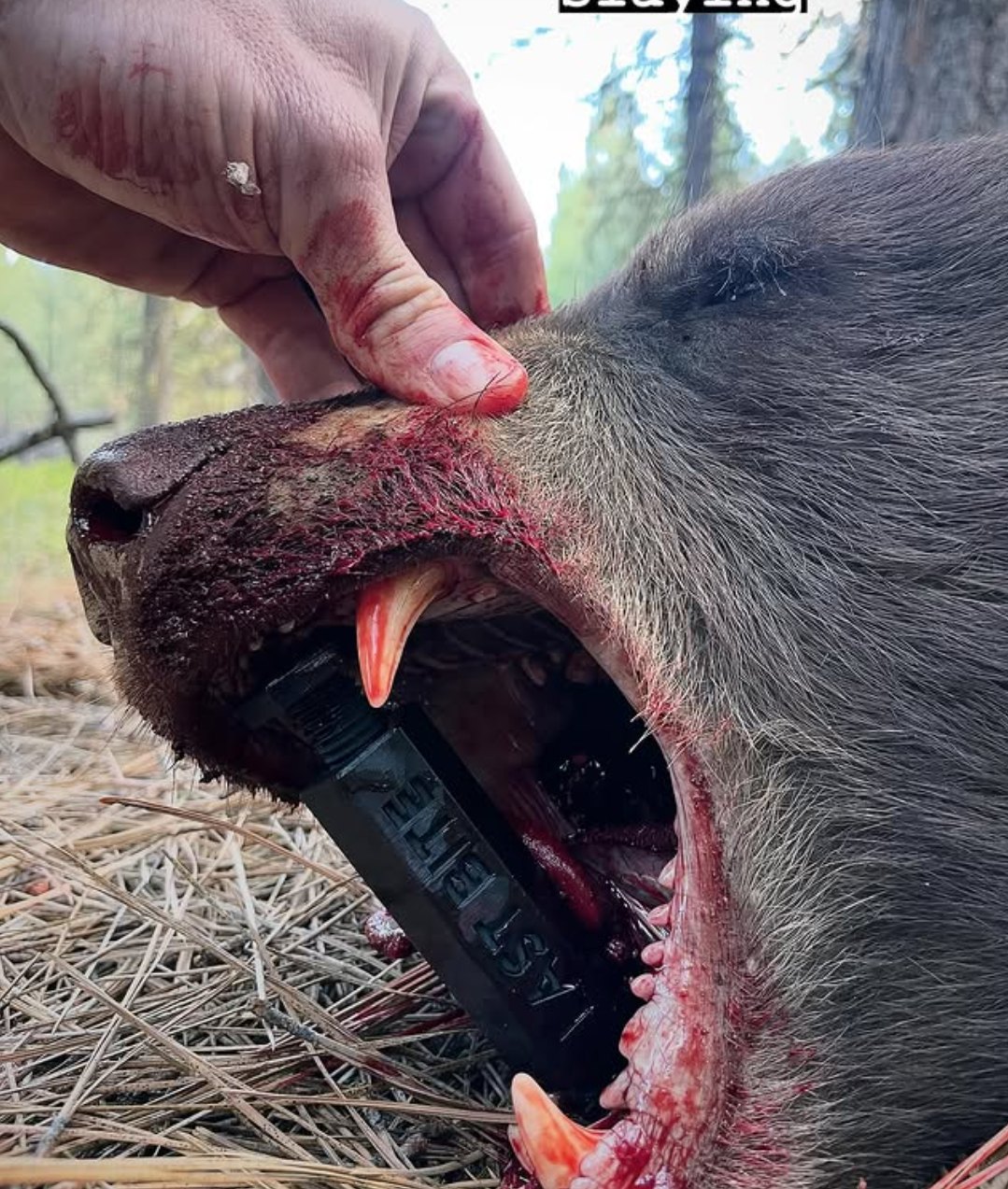
Why Not A Stick Or A Rock
Hunters have wedged sticks, rocks, and knife handles into jaws forever. It sort of works until it doesn't. Sticks snap under the pressure of a closing jaw. Rocks slip out as the muscles twitch through rigor onset. Both of them leave you at check-in fishing around in a frozen mouth.
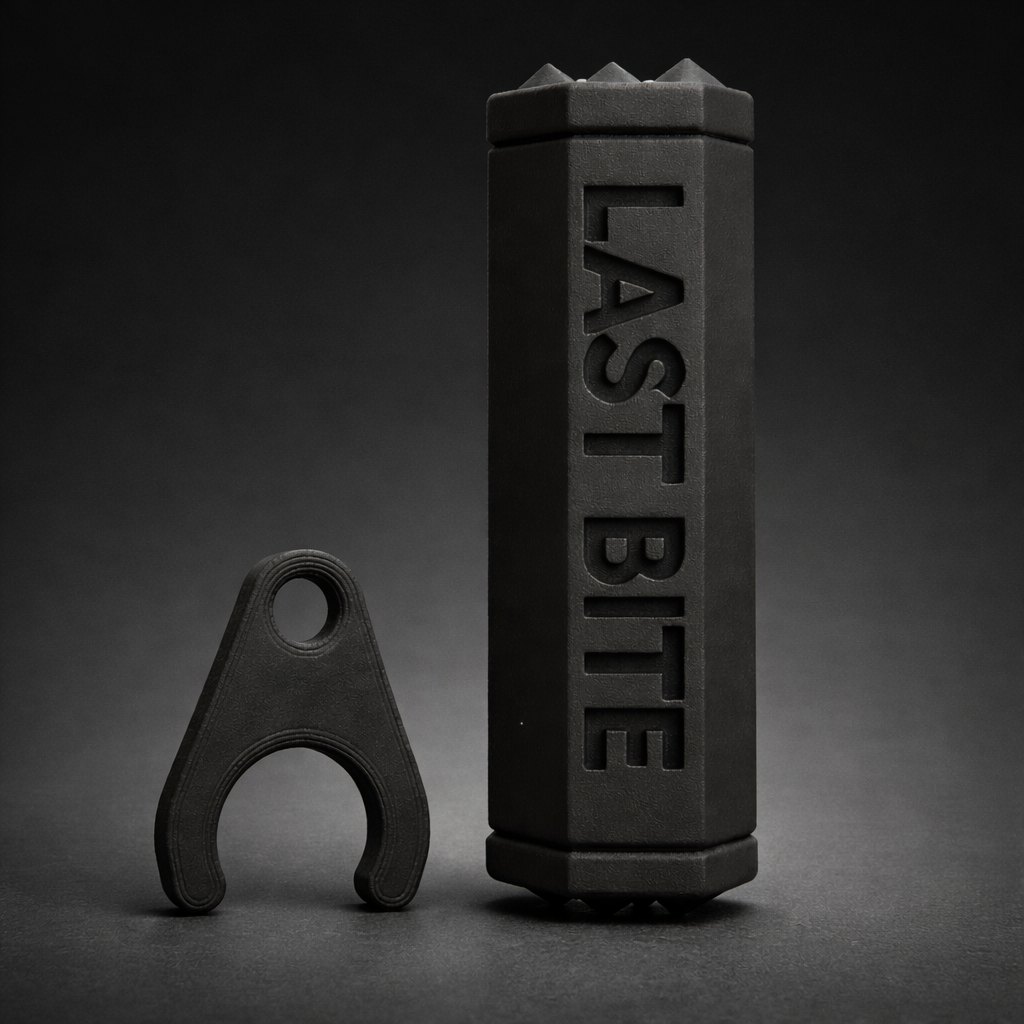
The Last Bite is shaped to seat between the molars, distribute the load across the bite arch, and hold position while the jaw locks down on it. It does not slip, it does not snap, and it does not get spit out by the natural muscle contraction as rigor sets.
Set It Right
-
01
Approach Safely. Confirm The Animal.Confirm the bear is down and still before anything else. Approach from behind the head. Do not put hands near the mouth until you are certain.
-
02
Open The Jaw With Light Pressure.The jaw is still loose in this window. You should not be fighting it. If you are, something is off. Stop and reassess.
-
03
Seat The Last Bite Between The Molars.Slot the Bite between the molars on one side. Confirm it is fully seated and stable. Move on to your dressing workflow and let rigor do the rest.
Bears are massive animals. Do not put fingers near the mouth until you have absolutely confirmed the animal is dead. Approach from behind the head. A reflex twitch from a jaw this strong is not something you recover from quickly.