Read This Before You Argue About It
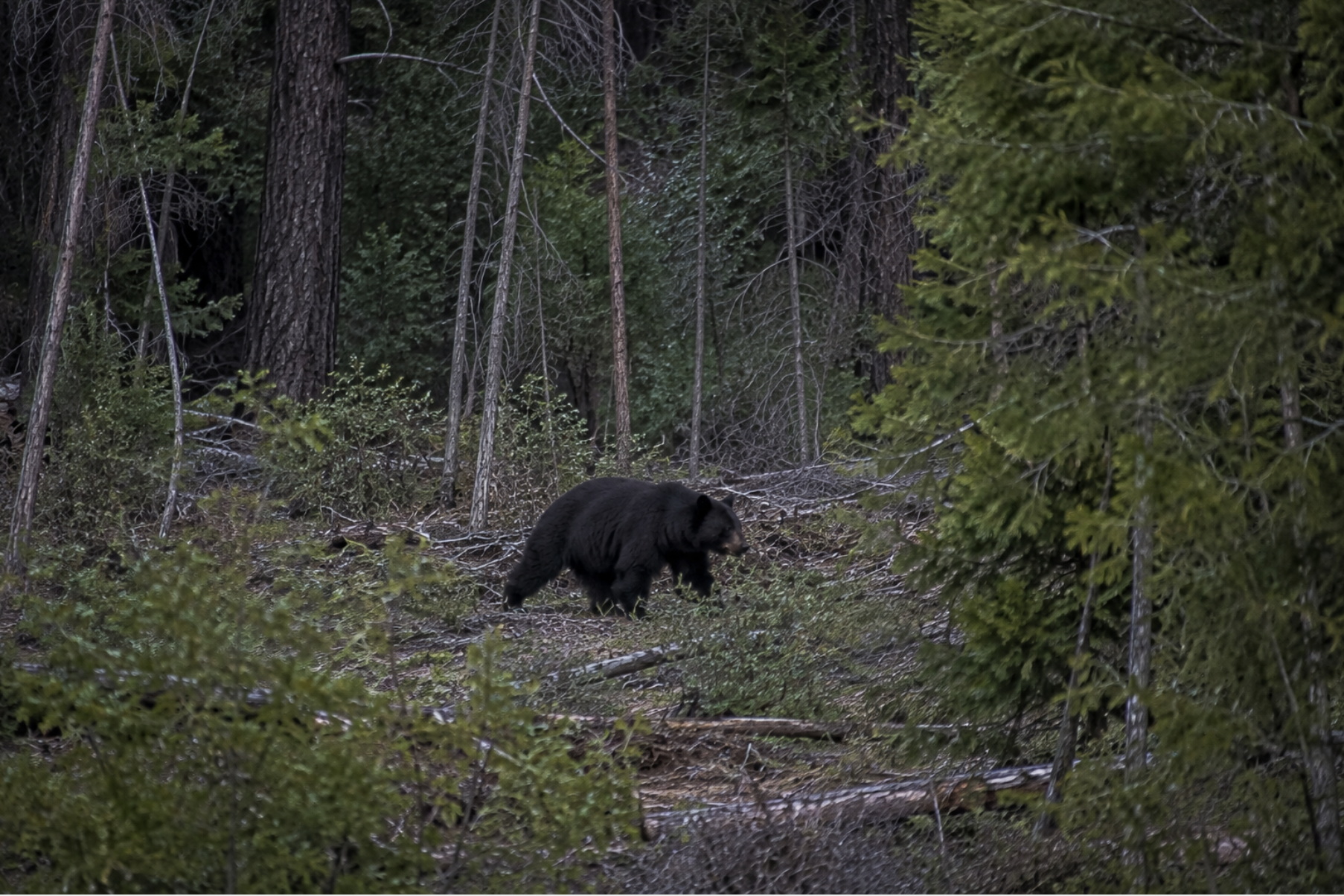
Bear hunting is one of those topics where the volume is high and the homework is low. You have heard it is cruel, pointless, or a relic. You have also heard it is the only thing standing between a suburb and a dumpster full of bears.
The truth is not a vibe. It is in state wildlife reports, peer-reviewed journals, and CDC bulletins. So we pulled the receipts.
Four reasons. Every one of them cited. If a claim does not have a source next to it, we cut it.
Here is the scorecard. Then we break down each one.
| Reason | The One-Liner |
|---|---|
| 01 Population Control | The lever agencies actually pull when bear numbers climb. |
| 02 Prey & Deer | Bears eat fawns. How much depends entirely on where you are. |
| 03 The Data Engine | Every checked-in bear is a data point science cannot buy. |
| 04 Wild Food | It feeds people. Cooked right, it is some of the best meat in the woods. |
01. Population Control. The Lever That Actually Works.
Start with the uncomfortable part for the anti crowd. Wildlife agencies do not treat hunting as a hobby they tolerate. Several treat it as their primary management tool because nothing else scales.
New Jersey said it in plain print. Its Fish and Game Council's 2022 Comprehensive Black Bear Management Policy states that a regulated hunting season is the most cost-effective and practical tool for managing black bear populations, and that there are no non-lethal methods currently available to effect a population reduction in bears. (NJDEP, 2022 Comprehensive Black Bear Management Policy)
New Jersey is also the live experiment. The state suspended bear hunting on state lands in 2018 and ended it entirely in 2021. In late 2022 the hunt was reinstated, and the Council adopted a new management policy citing a growing population as the reason. (NJDEP Black Bear Management)
You do not have to like it to see the logic the agency put on the record. In the absence of population control measures, it wrote, the rate of population growth will compound in future years as a greater number of female bears reproduce. (NJDEP, 2022 CBBMP)
Vermont shows the same story in raw numbers. State biologists estimate 6,800 to 8,000 black bears as of 2024 data, the fourth straight year above the state's objective of 3,500 to 5,500. (Vermont Fish & Wildlife, Sept 2025)
Vermont's lead bear biologist, Jaclyn Comeau, tied it together directly. High rates of hunter harvest, growing numbers of bears killed by vehicles, and increasing conflict between bears and people over the past several years all support that the model is reflecting real population growth. (Vermont Fish & Wildlife, Sept 2025)
02. Prey And Deer. The Part Nobody Expects.
Here is where honesty matters, because this is the pillar people overstate in both directions. Black bears are fawn predators. How big a deal that is depends entirely on the ground you are standing on.
In Michigan's Upper Peninsula, researchers radio-collared 100 newborn fawns over three years. Six-month survival was 36 percent, with predation the leading cause of death, on a landscape carrying roughly 25.9 black bears per 100 square kilometers. (Kautz et al., Journal of Wildlife Management, 2019)
A Pennsylvania study collared 218 fawns and found black bears killed at least as many fawns as coyotes did. The same researchers were blunt that it was not tanking the deer herd, because synchronized fawning simply overwhelms the predators. (Penn State / Pennsylvania Game Commission, 2001)
Now the caveat that keeps this honest. In that Pennsylvania work, predators killed 50 percent of collared fawns in remote big-woods country but only 8 percent on agricultural ground. (Penn State, 2001)
Same state. Same predators. Wildly different impact. Anyone who tells you bears are wiping out the deer, or that they have no effect on deer, is selling you half a study.
Myth: Bears are decimating the deer herd.
Receipts: In agricultural Pennsylvania, predators took just 8 percent of collared fawns. Habitat decides the story, not a bumper sticker. (Penn State, 2001)
03. The Data Engine. Why Your Checked-In Bear Is Worth More Than You Think.
This is the reason most non-hunters never hear, and it is the strongest one. Regulated hunting is the largest wildlife data pipeline in the country, and hunters are the ones filling it.
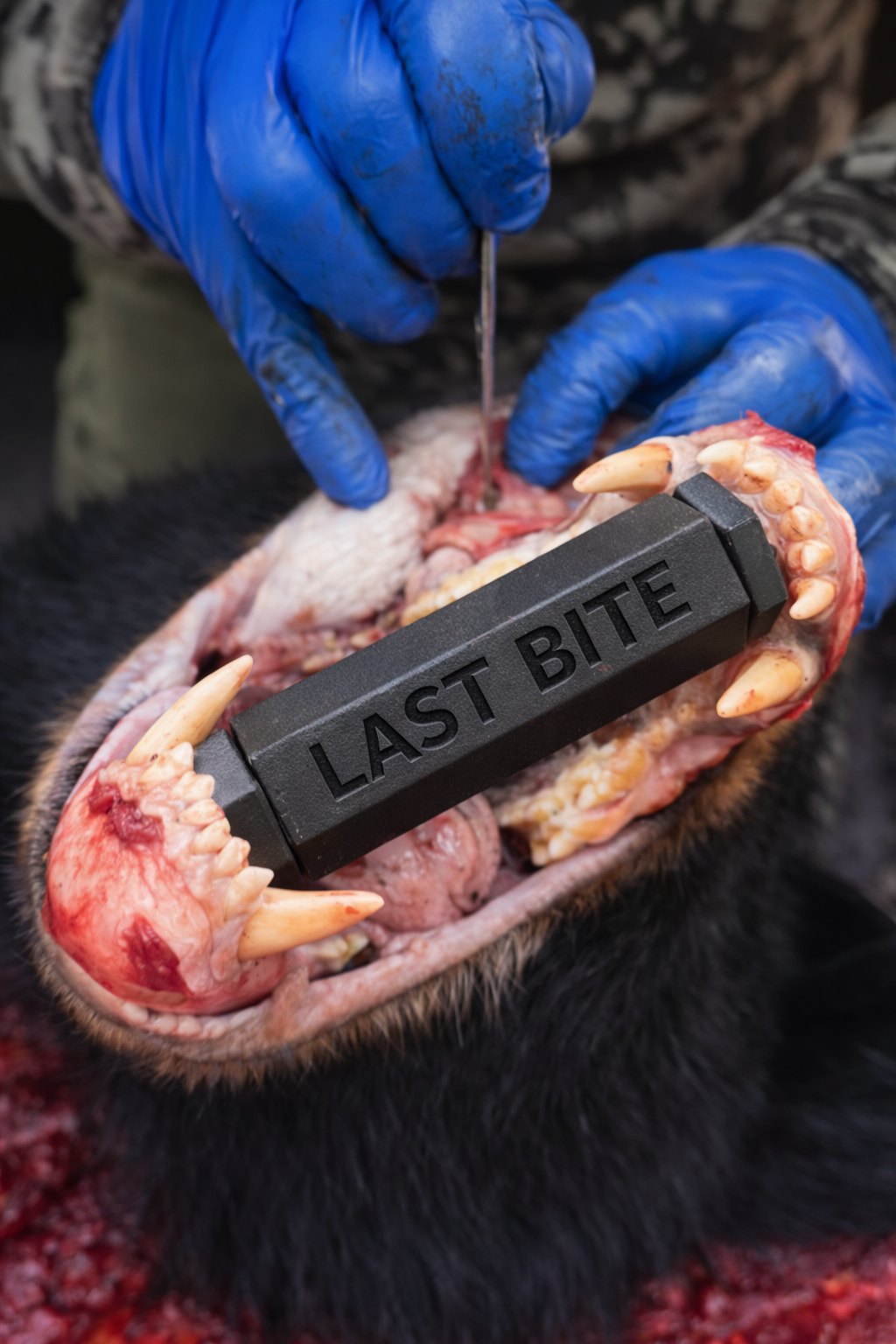
Take the tooth. States including Vermont, Wisconsin, Minnesota, Missouri, and Washington legally require hunters to submit a bear premolar at check-in or registration. (Vermont F&W, Wisconsin DNR, Minnesota DNR, Missouri Dept. of Conservation, Washington Dept. of Fish & Wildlife)
That tooth gets read like a tree. Cementum-annuli aging counts the annual layers laid down in the root to age the bear, which lets biologists reconstruct the population's age structure. (Virginia Dept. of Wildlife Resources)
Vermont's biologist said the quiet part out loud. Hunters' support, she noted, is essential for the state to keep building its population model on good data. (Vermont Fish & Wildlife, Sept 2025)
This is where Last Bite earns its keep. In California, CDFW staff extract that premolar at mandatory check-in. Set the jaw open with the Last Bite right after the kill and the mouth stays accessible through pack-out and the drive, so the extraction is clean instead of a wrestling match with a locked skull. (See our seed piece: Hold The Jaw, Save The Tooth)
Then there is the money. The tools, tags, and biologists behind all of this run largely on hunter dollars. In January 2025 the U.S. Fish and Wildlife Service apportioned over 1.3 billion dollars to state agencies, generated by federal excise taxes manufacturers paid on ammunition, firearms, archery, and angling gear, part of more than 29 billion dollars distributed since 1937. (USFWS, Jan 2025)
04. Wild Food. Cook It Right And It's Elite.
Last one, and the most personal. A bear is not a trophy that goes in the ground. It is a few hundred pounds of dark, rich meat, and wasting it is the actual crime.
But bear comes with a rule you break at your own risk. Cook it all the way through. Bears are common hosts for Trichinella, the parasite behind trichinellosis, and undercooked bear is the classic way people get it. (CDC MMWR, Oct 2024)
This is not theoretical. In November 2023 a gathering in western North Carolina produced 10 probable trichinellosis cases, all linked to undercooked bear meat. (CDC MMWR, Oct 2024)
The number to tattoo on your brain. The CDC says cook wild game to an internal temperature of at least 165 degrees Fahrenheit to kill Trichinella, and warns that freezing might not be sufficient for the freeze-resistant strain in North American bears. (CDC MMWR, Oct 2024)
-
01
Cook To 165F Internal, No Pink, Every Cut.
Use a thermometer, not your eyes. The kill temperature for Trichinella is 165 degrees Fahrenheit. (CDC, Oct 2024)
-
02
Do Not Trust Freezing To Make It Safe.
The North American strain shrugs off freezing that would kill the parasite in pork. Heat is the control that works. (CDC, Oct 2024)
Respect the meat, respect the temp, and a bear feeds a family for months. That is the whole point of putting one on the ground.
The Bottom Line
Population control the agencies say they cannot get any other way. A predator-prey balance that shifts with the habitat. The richest wildlife dataset in the country, funded and filled by hunters. And meat that feeds people when it is handled right.
You can still be against it. But now you are arguing with the wildlife agencies, the journals, and the CDC, not with a hunter in a comment thread.
That is the case. Cited, every line.